

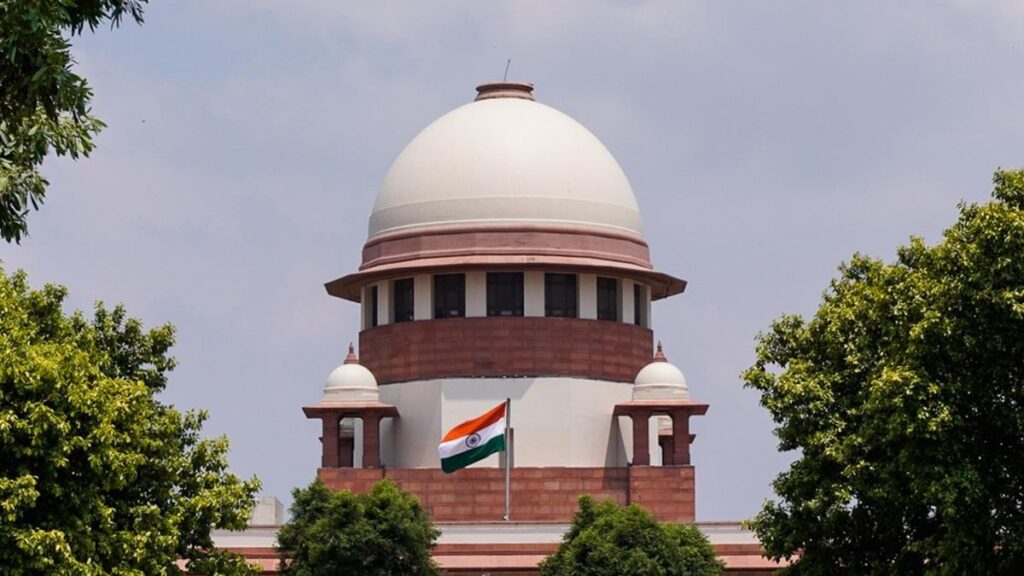
The Supreme Court of India announced on Tuesday its plan to establish a high-powered committee aimed at investigating allegations of police excesses against student protesters in Delhi. This committee will consist of retired judges, a former Director General of Police (DGP), a former Central Bureau of Investigation (CBI) director, along with other distinguished members.
The bench comprising Chief Justice Surya Kant, Justices Joymalya Bagchi, and V Mohana confirmed that the formal order to constitute this committee will be released on Wednesday. The court will incorporate suggestions from various parties regarding additional candidates for the panel.
The Supreme Court will instruct the surrender of video footage and CCTV recordings of the violence that occurred during the student protest on July 20, which targeted the Parliament. This material will play a crucial role in the committee’s assessment of the events.
Moreover, the panel will delve into the complaints made by female protesters who alleged systematic targeting during the protest march in various regions of Delhi. These allegations underscore the need for thorough scrutiny of police actions at the protests.
The bench urged Solicitor General Tushar Mehta to provide details regarding the First Information Reports (FIRs) against student demonstrators, which are currently under review for potential dismissal. It indicates the court’s willingness to leverage its plenary powers under Article 142 of the Constitution to address grievances.
The bench stressed, “It is the life of students which is at stake. We must consider this. They have a future ahead and the right to protest under Article 19 is a vital aspect of our democracy,” as it addressed a counsel opposing the quashing of cases against students.
In a significant revelation, Mehta noted that police had pinpointed over 2,800 “anti-social elements” allegedly involved in serious offenses during the protest. Their identification raises concerns about how responsibility is assigned in such mass mobilizations.
Previously, on August 3, the apex court clarified that the term “criminal antecedents” in its orders referring to student protesters pertained only to those linked with grave offenses. It asserted that states could close or withdraw FIRs against students lacking such backgrounds, in accordance with the law.
This clarification followed a statement from the Centre indicating a serious approach to not pursue FIRs against participating students provided they had no prior criminal records.
In earlier observations, the apex court had remarked that police violence or ‘lathi charges’ cannot find justification simply due to ongoing agitation. It emphasized that the right to peaceful protest is “absolutely guaranteed” under the law.
The protest on July 20 was organized by the Cockroach Janta Party, which witnessed clashes between demonstrators and law enforcement. Security personnel employed batons and teargas shells in efforts to disperse crowds advancing toward the Parliament, raising issues of civil liberties and police conduct during protests.
The Supreme Court’s intervention signals a crucial step towards accountability and transparency regarding police actions during protests, especially when students assert their right to voice concerns over issues as significant as educational reform.