
Supreme Court Refers Anticipatory Bail Pleas Issue to Bench
The Supreme Court referred the issue of direct anticipatory bail petitions to a three-judge bench. The practice, especially in Kerala, raises questions about procedural integrity.
 admin
0 comments
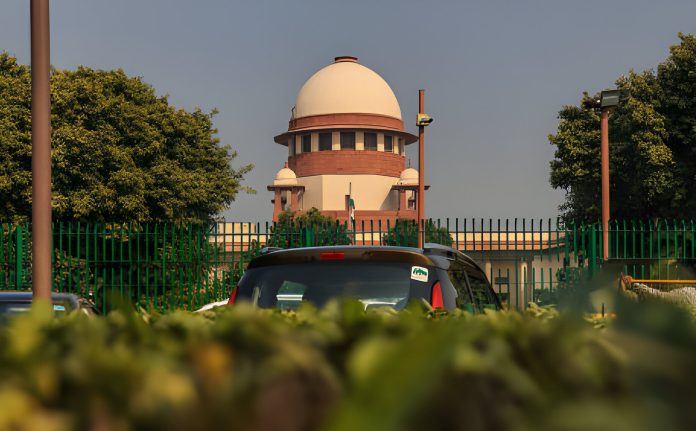
The Supreme Court of India, on Wednesday, referred the significant question of whether litigants can directly approach high courts for anticipatory bail to a three-judge bench. This crucial matter stems from concerns over procedural integrity within the judicial system.
A bench consisting of Justices Vikram Nath and Sandeep Mehta emphasized that the issue demands examination by a larger bench once constituted. “This matter requires to be heard by a three-judge bench,” the justices stated.
Previously, the apex court appointed senior advocate Siddharth Luthra as amicus curiae to assist in assessing the complications surrounding anticipatory bail practices.
The matter gained traction on September 8, when the Supreme Court voiced its apprehensions regarding the frequent acceptance of anticipatory bail applications directly by the Kerala High Court. The justices questioned, “One issue that is bothering us is that in the Kerala High Court, anticipatory bail applications are regularly entertained directly. Why is that so?”
The bench referenced both the old Code of Criminal Procedure and the new Bharatiya Nagarik Suraksha Sanhita (BNSS), 2023, indicating a defined hierarchy for bail applications. According to Section 482 of BNSS, it sets forth directions for granting bail to individuals fearing arrest.
“This practice does not exist in other states. Only in the Kerala High Court… anticipatory bail applications are regularly entertained directly,” the court observed, highlighting a significant divergence in legal procedures.
The discussion was further prompted by a plea filed by two men who challenged a Kerala High Court order denying them anticipatory bail. These petitioners had opted to approach the high court directly, bypassing the sessions court.
The Supreme Court pointed out that such practices could potentially undermine the acquisition of proper factual records, which would typically be available before a sessions court. “We are inclined to consider whether the option to approach the high court is a matter of choice for the accused or whether it should be mandatory to first go to the sessions court,” the bench remarked.
The apex court also issued a notice to the Kerala High Court through its Registrar General, seeking its response on the procedural concerns raised during this significant hearing.


