Omar Abdullah Critiques Disempowerment in J&K; Demands Statehood Timeline
Chief Minister Omar Abdullah criticizes the disempowerment of Jammu and Kashmir’s leadership, demanding a clear timeline for restoring statehood and expressing concerns over governance and regional autonomy.
 admin
0 comments
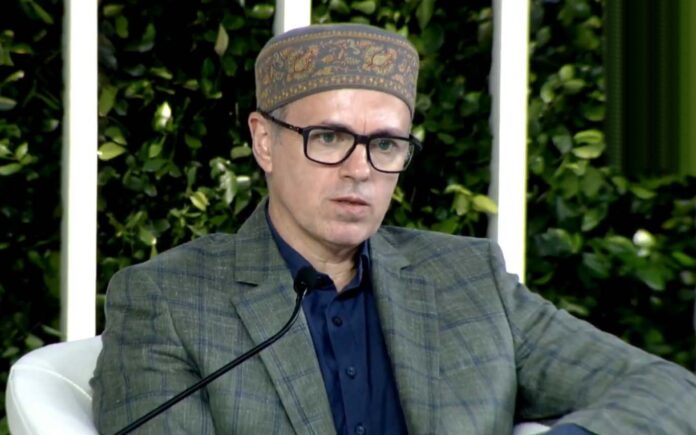
Jammu and Kashmir Chief Minister Omar Abdullah described his office as one of “disempowerment” during a recent event, stating that he faces a unique misfortune transitioning from leading an empowered State to heading a Union Territory with limited powers. Abdullah voiced his concerns on Wednesday, asserting that he operates under conditions far less authoritative than any other State Chief Minister in India.
During the event organized by a national newspaper, Abdullah delivered an emphatic critique of the current administrative framework in Jammu and Kashmir. He pointed out the frequent interference by the Lieutenant Governor’s office and reiterated his demand for the Centre to establish a clear timeline for restoring Statehood.
Abdullah expressed his discomfort with the phrase “Union Territory” when referring to Jammu and Kashmir, stating, “I hate being reminded that we are a Union Territory.” He highlighted that officers did not feel compelled to emphasize the term ‘State’ during his earlier tenure, unlike now when the UT status is frequently underscored.
In his remarks, Abdullah elaborated on the power dynamics within the region, characterizing them as “asymmetrical.” He challenged the authority held by the Lieutenant Governor, Manoj Sinha, who continues to perform roles traditionally associated with an elected government, such as chairing the Jammu and Kashmir Power Development Corporation.
What business does a security official have organizing tourism meetings? Abdullah questioned, referring to Sinha convening discussions regarding tourism in Gulmarg.
Furthermore, he alleged that an IAS officer was appointed to a role intended for Jammu and Kashmir Administrative Services (JKAS), which undermines elected governmental control over departments like the Information Department. Several cabinet decisions, particularly those related to modifying reservation percentages, remain pending with the Lieutenant Governor, leaving elected representatives in limbo.
Pointing to the stalled restoration of Statehood, Abdullah reminded the Centre of the three-step process that included delimitation, elections, and Statehood. “Two steps are complete. Why are we made to wait for the third?” he queried, challenging the Centre to specify what it defines as “appropriate time” for restoration.
If the timeline depends on political conditions, Abdullah demanded transparency: “If it is when the BJP comes to power, then be honest so people can decide.” He also asserted that the reinstatement of Article 370 hinges on changes at the national political level, claiming that it is pointless to expect the current government to restore the status it revoked.
In addressing the issue of radicalisation, Abdullah criticized the prevailing policies characterized by “hyper-nationalism” and collective punishment. He condemned practices like demolishing homes following terror attacks, questioning the logic behind punishing innocent families for others’ actions. “You demolished 10 or 12 houses after the Pahalgam attack, only to later find that there was no Kashmiri involvement. If those residents are radicalised, whose fault is it?” he challenged.
He also referenced the recent controversies where disproportionate scrutiny was placed on selections for sports teams and medical college admissions, largely focused on the representation of Muslims. “When you push an entire community to the margins, how can you expect no reaction?” he asked.
Switching focus to the national political landscape, Abdullah described the INDIA bloc as often being in the “ICU” or on “ventilator support,” acknowledging that issues regarding Article 370 are currently sidelined in discussions. He defended Congress leader Rahul Gandhi’s silence on such key matters, suggesting that Gandhi needs to win re-election before engaging in these conversations.
Departing from his father, Farooq Abdullah’s perspective, Omar Abdullah dismissed claims of EVM tampering, advocating that the party should take accountability for its electoral defeats. “I believe we should own our defeats and correct our mistakes,” he stated, attributing electoral challenges to constituency delimitation instead.
While addressing economic and environmental challenges in the region, Abdullah described issues like pollution and extended dry spells affecting Srinagar, due to the valley’s geography that traps smog. He clarified a misconception regarding tourism being the sole economic driver of Jammu and Kashmir, highlighting that tourism ranks fourth in Gross State Domestic Product contributions.