
MLFF Toll System & AI Highway Management to Launch by 2026
Union Minister Nitin Gadkari announces the implementation of the Multi-Lane Free Flow toll system and AI-managed highways across India by 2026, enhancing travel efficiency.
 admin
0 comments
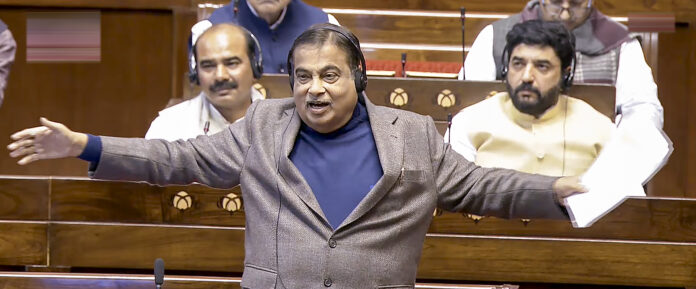
Union Minister for Road Transport and Highways Nitin Gadkari announced on Wednesday that the Multi-Lane Free Flow (MLFF) toll system will launch in India by the end of 2026. This revolutionary system aims to eliminate waiting times at toll plazas, greatly benefiting commuters across the nation.
Gadkari provided these insights during the Question Hour in the Rajya Sabha. He explained that the new tolling mechanism will utilize Artificial Intelligence, satellite technology, and number plate recognition to facilitate uninterrupted vehicle movement without stopping at toll plazas.
“With the MLFF system, commuters will be able to cross toll points at speeds up to 80 km per hour,” Gadkari stated. He emphasized that this innovation would replace the existing FASTag system, which has significantly improved toll efficiency in recent years.
Previously, toll payments could take between three to ten minutes, but with the introduction of FASTag, the duration has been reduced to less than a minute. “FASTag increased our revenue by at least ₹5,000 crore. The MLFF is an even better facility, and our goal is to bring waiting time down to zero minutes,” he added.
The Minister highlighted the economic advantages of the MLFF system. He mentioned that it could save ₹1,500 crore in fuel costs and generate an additional ₹6,000 crore in government revenue while completely eliminating toll leakage and theft.
“By 2026, we will achieve 100% implementation of this system. Once operational, incidents of toll theft will cease, transparency will improve, and commuters will not face disruptions at toll plazas,” assured Gadkari.
He further elaborated that the AI-enabled technology would lead to significant reductions in travel time, thereby improving overall efficiency on national highways across India. The Minister clarified the division of responsibilities, stating that the central government manages only national highways, not state highways or city roads. He noted that concerns regarding state and urban roads often circulate on social media but do not pertain to national highways.
“We are committed to establishing a transparent, efficient, and corruption-free system,” Gadkari reiterated. His statements underscored the government’s dedication to modernizing highway infrastructure and improving road travel for millions of users nationwide.
This announcement signifies a landmark advancement in India’s transport infrastructure, promising enhanced connectivity and convenience for citizens. The integration of advanced technologies in transit management reflects the government’s vision to embrace innovation while addressing the challenges of road travel.


